8-week online course · ages 13–18

How to Train Your AI Agent

Your teen trains AI agents that do real work on their own, and learns the skill every career now needs: break a problem down, hand the right work to AI and check the result.


Built on UNESCO's AI competency framework Follows OpenAI · Anthropic · Google agent standards No coding / no tech skills needed
The 8-week path
  1. Sessions 1–7 · Build SAMYour teen builds SAM from scratch with all 10 components, running on its own daily schedule
  2. Sessions 8–13 · Real jobsSAM uses tools and triggers to run a full week of work on its own, with proof for every task
  3. Sessions 14–19 · TrustSAM tests itself, learns from mistakes, stands up to attacks and protects private data
  4. Sessions 20–24 · MultiplyOne SAM serves many families at once, then your teen trains a brand-new agent for a new job, solo. Certificate and portfolio

What your teen gains from this course

A teen at her laptop with holographic panels for four kinds of AI agents linked to one blueprint
Trains any AI agentThe skills and mindset to train any AI agent, built on the 10-component method from OpenAI, Anthropic and Google.
A proud teen holding his certificate beside his mother and a laptop showing his AI agent portfolio
Portfolio & certificateA working AI agent, a detailed portfolio and an end-of-term certificate: a standout extracurricular.
A teen planning steps in a notebook flowchart and checking a task list on her laptop
Work habits for the AI eraBreak a problem down, hand the right work to AI, check the result and submit it for review, every session.
A teen at his laptop directing a team of holographic AI agents, each working on its own task
One teen, a team of AI agentsYour teen directs AI agents that work around the clock: a head start in whatever career they choose.
Small live sessions10 students per session, 90 minutes each
A one-of-a-kind portfolioEach student designs their own family for SAM to serve
You choose the timesWeekly session times that fit, switchable up to 2 hours before
Feedback every sessionYou always know what your teen accomplished
36 hours of learning24 sessions × 90 minutes, over 8 weeks or 1 month

Watch with your teen tonight: see what they'll build in 8 weeks

For parents
The program in 2 minutes
For your teen
How to train your AI agent
Why this program

The most important skill of the AI era: knowing how to delegate to AI

AI will be part of every career your teen chooses. They learn to break a problem down, hand the right work to AI and verify the results, so they can lead AI in any field without dulling their analytical thinking.

"I have a 17-year-old son and a 10-year-old daughter. I built this program for my own kids first, and now I'm opening it to yours."
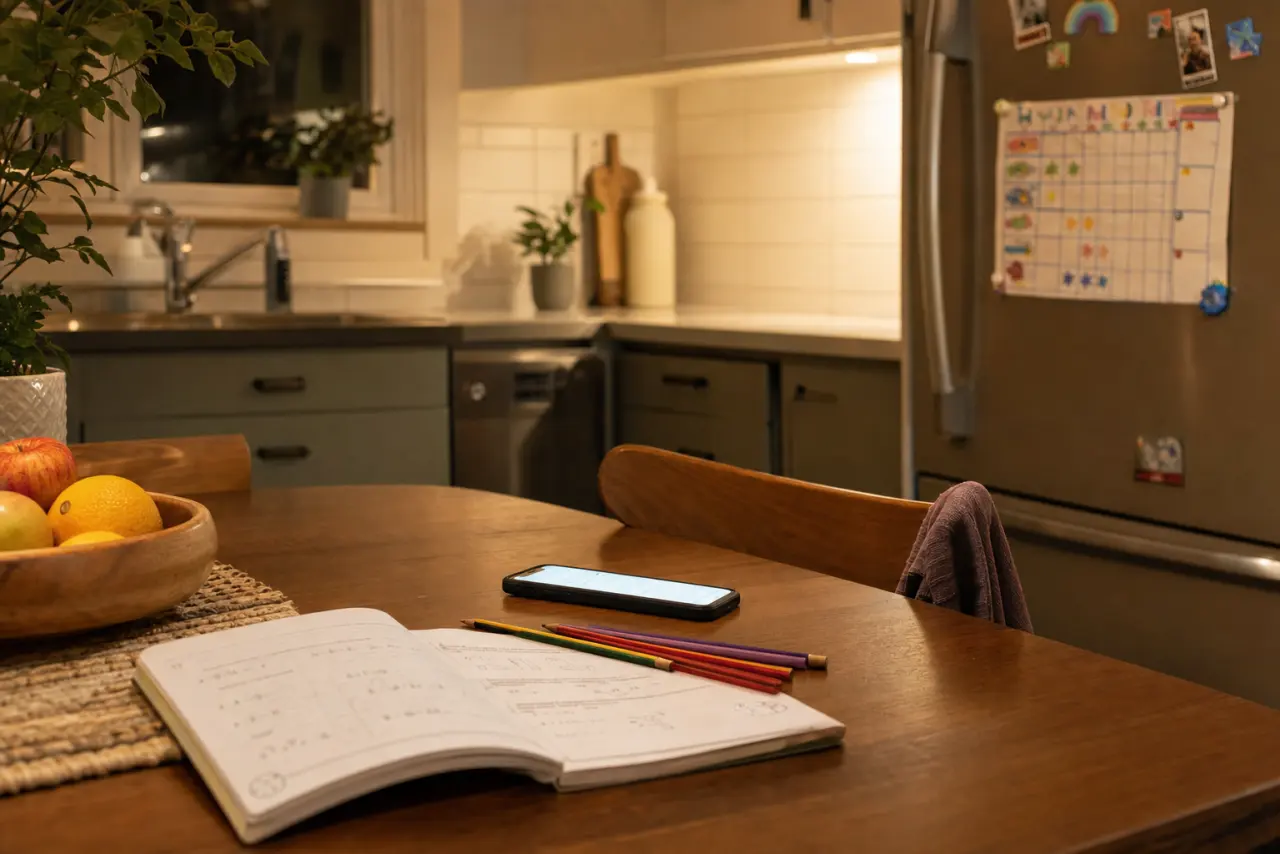
A family dinner table in the evening with a workbook and a phone
What your teen builds

SAM: an AI agent that sees, judges and acts on its own

Your teen trains SAM for a practice family, one new skill per session, until all 10 components are in place. Why a family? Every teen already knows its jobs, so all their attention goes to the skill. The same skill later runs marketing, customer care and online stores.

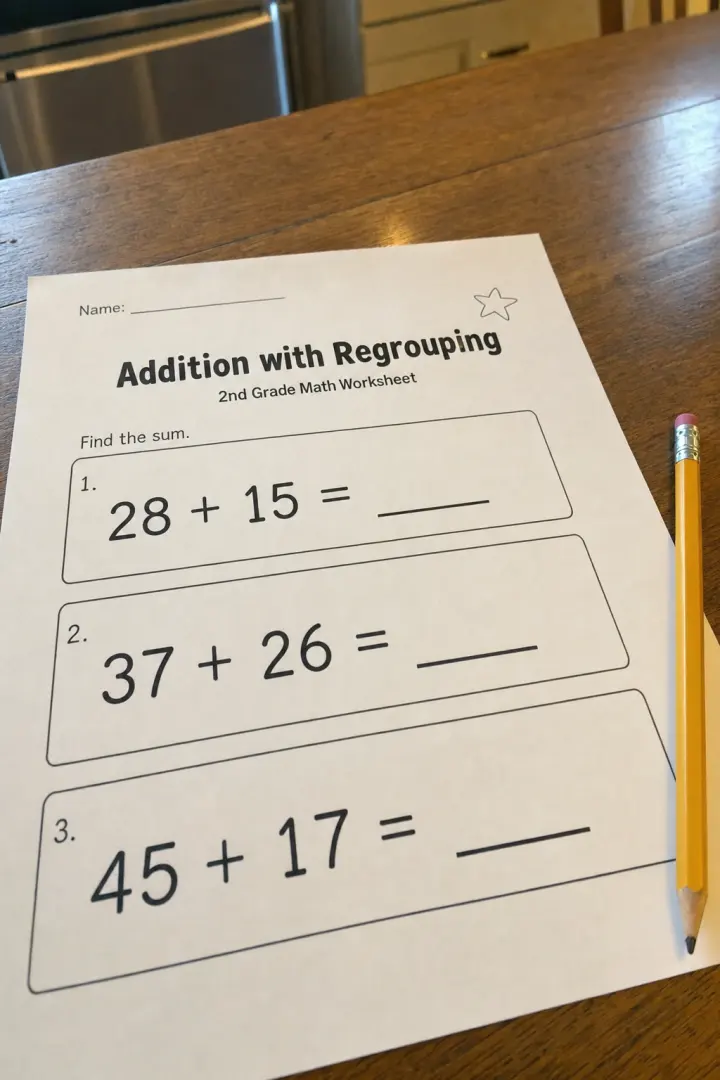
A math worksheet photo sent to SAM
SAMTry splitting 15 into 2 + 13. What's 28 + 2?
Coaches step by step

SAM announces homework time. A child snaps a photo of a math problem they're stuck on. SAM gives hints step by step so the child works out the answer.
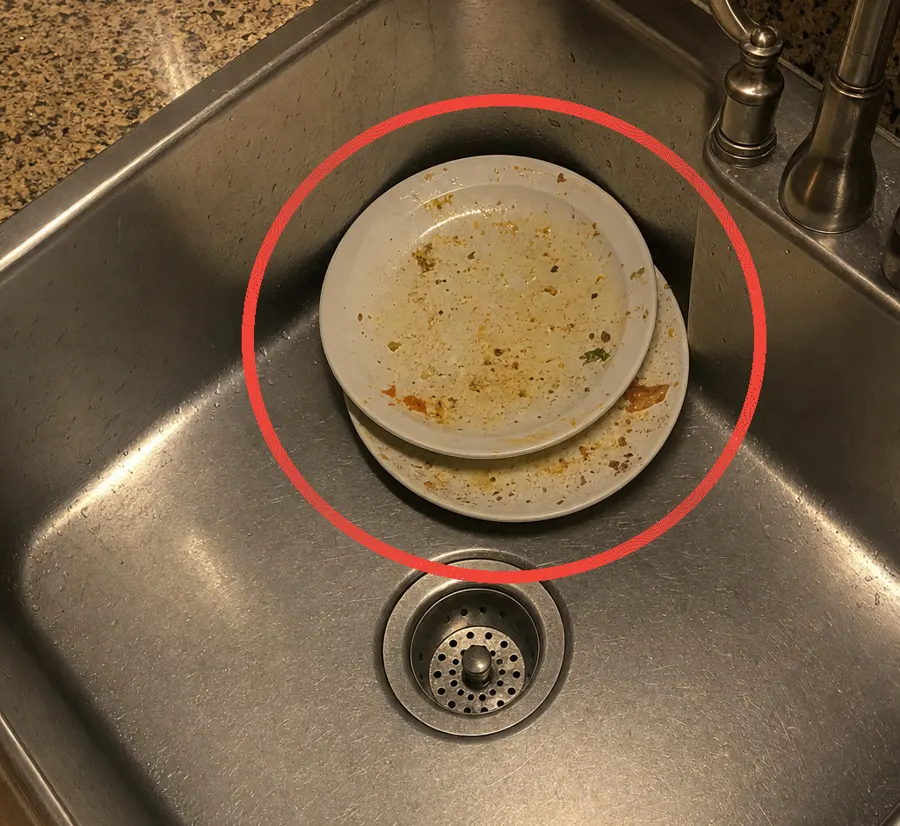
A sink photo with 2 plates left
SAM2 plates still in the corner of the sink → not done yet 🍽️
Checks photo proof

Big brother reports "dishes done" with a photo. SAM looks at the photo and spots 2 plates left in the corner → not done yet.


Trash bin still in the garage
✗ In the garage
Trash bin out at the curb
✓ Out at the curb
Knows what "done" means

The photo shows the trash bin still in the garage. SAM knows "take it out" means out to the curb and waits for the right photo before marking it done.

🌟 SAM's weekly note
📚Little sister: homework done 7/7 days
🧽Big brother: 5/5 chores, all on time
⏰Often late: trash night on Tuesday
💬Tip: a word of praise for big brother tonight would mean a lot!
Reports every Sunday

Every Sunday, SAM sends parents a short note: who worked hard, what tends to run late, and a well-timed compliment to give.

Behind every card is one skill: break a goal into small tasks, give each to AI with clear rules, and check the result.

The 8-week path

Four stages, one AI agent that keeps growing

Each session, SAM learns one new skill and still passes every test from the sessions before.

Sessions 1–7 · Build SAMSix questions take SAM from an empty folder to a working agent with all 10 components, running on a real daily schedule.
Sessions 8–13 · Real jobsSAM gets tools and triggers and runs a full week on its own: reminders, photo checks, homework coaching, a points ledger and a weekly report.
Sessions 14–19 · TrustSAM tests itself, learns from its mistakes, stands up to tricks and keeps private information private.
Sessions 20–24 · MultiplyOne SAM serves several families, each with its own separate data. Then your teen builds a new agent for an online store, and a final one alone, for a problem revealed on the day.
Education standard · UNESCO

All 4 AI competency areas UNESCO sets for students

The program is built on UNESCO's AI competency framework for students:

Human-centred mindset

People always make the call.

Ethics of AI

Keep data private; answer only from real sources.

AI techniques & applications

Know which jobs go to code and which go to AI.

AI system design

Break problems down, build the system, test and fix.

1 · UnderstandGuided step by step
2 · ApplyThe group trains SAM Family together
3 · CreateYour teen multiplies SAM and builds a new agent
Industry standard · OpenAI · Anthropic · Google

24 sessions, built on the 10 AI agent components OpenAI, Anthropic and Google describe

Each component is a skill your teen reuses for every AI agent they build.

1Goalwhat "done" looks like
2Contextwho it serves
3Memorywhat it keeps
4Instructions & exampleshow to do the job
5Rules & guardrailswhere the limits are
6Toolswhat it can act with
7Knowledgeanswers from real sources
8Orchestrationwhen it runs
9Self-checkchecks before sending
10Evaluationtests that prove it works
A live session

Learn briefly, build right away, get feedback right away

Session 7 · Rules & self-check
Task
Write SAM's "dishes" rule
  • Task: wash all the dishes
  • Proof: a photo of the sink
  • Pass criteria: an empty sink
  • Test with 3 sample photos
How are pass criteria different from proof?
Teaching assistant
Proof is what you send (the photo). Pass criteria are what SAM looks for in the photo to know the job is done 👍
Here's my work
chatgpt.com/share/…
Teaching assistant
Clear rule, tested on all 3 photos. Great job!
✓ Passed 9/10
Ask anytime…
Send
  1. Live at your usual timesYour teen joins live sessions at the weekly times you picked, like school.
  2. GuidedShort, visual, one step at a time.
  3. Hands-on practiceYour teen builds on their own computer and asks whenever needed.
  4. Submit & get feedbackGraded with feedback right in the session.
  5. Parents get feedbackAfter every session, you see what your teen accomplished, and a reminder goes out a day and an hour before each session.
  6. Missed a session?Every session is recorded, so your teen can watch it again and catch up in a later session.
What parents receive

After every session, you know what your teen accomplished

Session feedbackSample

Session 7 · Rules & self-check

  • ✓Today your teen: wrote SAM's "dishes" rule and tested it on 3 sample photos.
  • ⭐Highlight: spotted on their own the case with 2 plates left in the sink.
  • 💬Ask at dinner: "How is proof different from pass criteria?"
Course summaryEnd of term

A summary written just for your teen

  • 🤖The AI agent they built and how it works
  • 🚀Their final challenge: a new agent built on their own
  • 💪Their standout strengths in the course
  • 🧭Suggested next steps for your teen
  • 🎓Certificate and detailed portfolio
Work style

While learning, your teen already works the way the tech industry does

  • Working independently with AI agents
  • Asking at the right moment, through the right tool
  • Submitting work for review, the way engineers push code
  • Getting feedback from an experienced mentor

Your teen builds self-directed learning and working habits from age 13.

Results

Proof in hand after 8 weeks

  • An AI agent they built that actually runs
  • A new agent of their own, built in the final challenge
  • A certificate, a detailed portfolio and a course summary written just for them
  • The 10-component method for every AI agent they build next
Safety & data

Peace of mind for your family

  • Students work with a simulated family
  • Your teen chooses what to share with AI
  • Important actions always need a parent's approval
Parent checklist

What parents ask

Thinking & independence

  • Does my teen stay the thinker, with AI as the guide?

    The first rule your teen writes for SAM is "AI hints, you do the work." Having set that boundary themselves, they understand it deeply.

  • Does it strengthen foundational thinking?

    Your teen breaks problems down, writes precise instructions, sets pass/fail criteria, finds errors and fixes them: logic, writing and argument.

  • Will my teen stay focused for the whole session?

    Your teen learns at set weekly times, like a school timetable, which builds a routine. Each session is split into short blocks: guided, build, submit and get feedback. Your teen always has real work in hand.

Future & advantage

  • Will these skills stay valuable?

    Your teen learns a method: the 10 components are how every AI agent is built, however the tools change.

  • What edge does my teen gain?

    Your teen enters high school and college ready to lead AI: delegating well, verifying results and owning the outcome.

  • Will the project be uniquely theirs?

    Each student designs a family of their own for SAM and builds a new agent in the final challenge, so every portfolio is one of a kind and shows clearly how your teen thinks.

Safety & wellbeing

  • Is our family's information kept safe?

    The sessions work with a simulated family. Your teen learns the exact rule: what to share with AI and what to keep private.

  • Will my teen use AI honestly and wisely?

    Your teen learns to make AI answer from real sources, to fact-check it, and to carry "AI hints, you do the work" into schoolwork.

  • Can a 13-year-old keep up?

    Every new idea comes with an everyday example, guidance is short and visual, and help is one question away during the session.

  • Does my teen build communication skills?

    Your teen practices interviewing to understand each person's needs and designs an AI agent that speaks to each family member: real practice in empathy.

Family involvement

  • Can I follow my teen's progress?

    After every session you receive feedback on what your teen accomplished, plus a reminder a day and an hour before each session. At the end comes a course summary written just for them.

  • What if my teen is busy at the chosen time?

    Switch that session to another time from your teen's page, up to 2 hours before it starts. Missed one? Your teen makes it up in a later session, and every session is recorded to watch again.

Getting started

  • Does my teen need coding or tech skills?

    No coding / no tech skills needed. Your teen trains the AI agent in plain English: instructions, examples and tests. Knowing how to use a computer is enough.

  • What does my teen need?

    A Mac or Windows computer and a ChatGPT account on the Go plan or higher (about $8/month). Your teen's agent runs in Codex, inside the ChatGPT desktop app.

  • How much screen time per week?

    Each session is 90 minutes, all of it learning and building. The 8-week course meets three times a week (4.5 hours); the 1-month intensive meets six times a week (9 hours).

What your family gains

A sharp mindsetYour teen moves from technology user to someone who directs technology.
Confidence & independenceYour teen knows how to solve a hard problem systematically.
IntegrityYour teen understands ethical boundaries and uses AI wisely and kindly.
Tuition & what you need
New groups start every week
8-week course
$990
3 sessions/week · 90 minutes eachEnroll in the 8-week course
1-month intensive
$1,190
6 sessions/week · 90 minutes eachEnroll in the intensive

Both options include:

  • 24 live sessions, 36 hours in total
  • Grading and feedback after every session
  • A course summary written just for your teen
  • End-of-term certificate and portfolio
  • Every session recorded, to rewatch or catch up

Your family provides: a Mac or Windows computer and a ChatGPT account on the Go plan or higher (about $8/month).

Schedule: you choose the session time

If your teen wants to keep going

Each course is a complete program. Later courses reuse the 10 components on bigger problems:

SAM Family→SAM Marketing→SAM Shop→SAM Business→SAM Ph.D (research)
Binh NguyenBN
Your instructor

Binh Nguyen

  • Principal, WideCast Academy of Applied AI.
  • Has built and sold AI companies; author of a book on AI; AI award recipient.
  • Speaker and competition judge.
  • U.S. green card holder through EB-1A, the category for individuals of extraordinary ability, in applied AI.
  • Taught this program at home first, to a son (17) and a daughter (10), then to pilot groups.

Save your teen a seat in the upcoming term

New groups start every week. Just 10 students per session, and you choose your teen's session time when you enroll.